LUCKNOW: Congress general secretary Priyanka Gandhi Vadra slammed the BJP on Sunday, over its statement that she was a ‘political tourist’. “I am not a political tourist. I have been regularly coming to UP. This is BJP’s propaganda to show me and my brother Rahul as non-serious politicians and we are not going to be cowed down by it,” she said.
In an informal interaction with media persons, Priyanka said that the BJP repeatedly wanted to create a narrative about she and Rahul not being serious politicians. “They (BJP) have created a perception that I have been away from UP since the past one and a half year whereas the fact remains that I have been regularly attending kisan panchayat and other programmes,” she said.
Asked about the future of the Congress in UP in view of the upcoming elections, she said, “I admit that our organization is weak compared to other parties. We have been out of power here for 32 years. But we are working on building up the organization and the journey is long. I am personally working 24X7 with all district units.” About the possibility of the Congress forging an alliance or going it alone in the next assembly elections, Priyanka said, “We are not close minded on the issue. It is too early to say anything about this but we will take a decision that is not detrimental to the interests of the organization or the party.” Priyanka, who is on the third day of her visit to Lucknow, said she has been trying to meet maximum number of party workers and groups. “My WhatsApp number is with everyone and it is wrong to say that I am not accessible,” she said.
After Bengal, Tripura is now the TMC’s new ground for “Khela Hobe” with two important ministers Derek O’Brien and Kakoli Ghosh Dastidar arriving in the state to bail out 23 members of a survey team from poll strategist Prashant Kishor’s organisation, Indian Political Action Committee (I-PAC).
Attacking the BJP, O’Brien said 23 professionals who came to Tripura for work were arrested immediately on the orders of Prime Minister Narendra Modi and Home Minister Amit Shah. “The BJP is trying to implement the Gujarat model in Tripura. They are not allowing us to speak in Parliament. Mamata Banerjee will take BJP head-on now.”
Earlier, TMC’s all-India general secretary and Mamata’s nephew Abhishek Banerjee had in his very first press conference said TMC will take the BJP head-on, thus setting the party’s agenda for Tripura.
Even as the TMC tries to expand its base, the state BJP has said Banerjee’s party has no footing in the state where the senior leaders are camping.
A woman in Bareilly of Uttar Pradesh murdered her father and then hung his body from a tree for disapproving of her wedding plans. The woman and her husband made the man drink alcohol and after he was drunk enough, they stuck him with an iron rod till he fell unconscious.
According to a report in The Times of India, the 46-year-old farmer, Harpal Singh, disapproved of his daughter’s relationship and had also refused to hand over the 10-bigha land he had.
Harpal’s body was later found hanging from a tree at a village in Sambhal of Bareilly. Initially, it was presumed to be a case of suicide, however, the autopsy soon revealed a different story.
The autopsy showed injury marks on his body, which prompted the police to launch further probe into the death.
Police have said the victim’s wife had lodged a complaint that on July 19, Harpal Singh went to his farm as usual, but did not return home. He was found hanging from the tree the next day.
The wife suspected foul play and informed the police. It was later found that the victim’s daughter along with her lover and his friend had conspired to kill him.
Police found that the victim’s daughter had made multiple phone calls to her boyfriend the same day her father went missing from his field. This led the police to suspect the daughter’s role.
Preeti and her boyfriend Dharmendra Yadav were picked up by the police from Badaun while the third accused is still absconding. The two later confessed to their crime during an interrogation.
An FIR under charges of murder and criminal conspiracy has been lodged against the three accused.
A rape-accused man allegedly died by hanging himself in the lockup of Maudaha Kotwali police station here with three policemen placed under suspension, officials said on Wednesday.
A police sub-inspector and two constables, who were prima facie found to be guilty, have been suspended by Hamirpur Superintendent of Police Narendra Kumar Singh.
Sanjay, a resident of Khandua village in Mahoba district, hanged himself in the lockup of Maudaha Kotwali on Tuesday night, the SP said. He was taken to the district hospital where the doctors declared him brought dead, he said.
Police had taken the man into custody on charges of luring a teenage girl and raping her, he said.
A sub-inspector (SI) and two constables, who were found prima facie guilty, have been suspended with immediate effect and investigation of the whole case has been handed over to Additional Superintendent of Police (ASP) Hamirpur, the SP said.
The Olympic Games are an international sports competition which are held every four years in a different city. Thousands of athletes from all over the world compete against each other in individual and team sports. Over 1 billion people watch the games on TV.
The first Olympic Games were held in Greece in 776 B.C. They were called the ancient games and lasted until the 4th century A.D. The modern games began in 1896, when the Frenchman Pierre de Coubertin revived the games to bring peace and friendship to the young people all over the world.
Today, there are summer and winter games. Up to 1994 both games were held in the same year, but now they are staged two years apart from each other.
Ceremonies and symbols
The Olympic Games begin with the opening ceremony . Athletes from all the participating nations march into the stadium. Greece comes in first, because it was the first nation to hold the Olympics and the host nation comes in last.
The Olympic flag is raised and a chosen athlete lights the Olympic flame . It is a symbol of spirit , knowledge and life. The fire comes from Olympia , a small town in Greece and many runners transport the flame in a torch relay to the site of the games. It burns from the opening ceremony until the end of the games.
The Olympic rings were created in 1913 and represent the five continents (Africa, Asia, Europe, Australia and the Americas).
All athletes must take the Olympic oath . One of them has to promise that all athletes will give their best and compete in a fair way.
After each event, medals are given to the first three athletes. They receive gold, silver and bronze medals. Their flags are raised and the national anthem of the winner’s country is played.
The International Olympic Committee
The IOC is the organisation that governs the games. It decides which sports and events are held at the games. The IOC also selects the host city for the summer and winter games, at least seven years before they take place. Cities that want the games must show that
they have enough stadiums for all events they have enough room for all the athletes they can provide safety for the athletes they can transport athletes and spectators from one event to another Host cities must build an Olympic village where all athletes live during the games.
How can athletes take part ? Normally, each country decides for itself which sportsmen and –women are allowed to take part. Athletes must qualify for the games by winning or doing well in competitions before the Olympic Games start.
Athletes, who are sent to the games by their country must be a citizen of that country. For years, only amateurs were able to participate in the games, but today, most athletes are professionals, who earn their money through sport.
Most governments give their team money so that it can take part in the games.
The Ancient Games The ancient Olympic Games were celebrated at Olympia, Greece every four years. They were held in honour of the god Zeus. In the early games, only Greek men were allowed to participate. The games consisted of sports like footraces , wrestling , boxing , the pentathlon and horse racing. The last event of the games was usually a chariot race .
When the Romans conquered Greece in 140 B.C. the games started to lose their religious meaning and in 393 the Roman emperor banned the event.
The Summer Games The Summer Games are held during the summer season of the host country. They last for 16 days. Today, there are more than 270 events during the games. Over 15,000 athletes from 190 nations take part.
The next Summer Games will be held in London (2012).
The Winter Games The first separate Winter Games were held in Chamonix, France in 1924. They usually take place in February. Today, the Winter Olympics include over 60 events. Athletes from more than 60 countries participate .
Politics and the Olympic Games In the past, the Olympic Games have been disturbed by political issues . In 1936 the IOC chose Berlin as the site for the 1936 Summer Games. A few years later, Adolf Hitler’s Nazi Party rose to power and Hitler used the games to show Germany’s power .
In 1968 two Black American runners protested against their government and raised their fists when the American national anthem was played.
In 1980 the USA—and many other countries—didn’t send athletes to the games in Moscow because the Soviet Union had invaded Afghanistan a year before. In return , the Russians and other Communist countries refused to take part in the 1984 games in Los Angeles.
The worst day in Olympic history came on September 5th, 1972 during the Munich games. Eight Palestinian terrorists broke into the Olympic village and killed two Israeli athletes. 9 others were taken hostage . They wanted the Israeli government to set free over 400 Arab prisoners in Israel . During a battle with German policemen all hostages and the terrorists were killed.
Olympia today The Olympic Games have become very successful over the past years. More and more people are able to watch them on TV and television stations are spending more money for the rights to broadcast the games. The IOC earns more money than ever before. With this money they help athletes in poorer countries.
Drugs have become a big problem. Some athletes take drugs before and during the games in order to help their muscles grow.When they are caught they are disqualified. and their medals are taken away from them.
A 31-year-old junior engineer was arrested for allegedly snatching the gold earrings of a woman in Delhi’s Mansarovar Park area. During interrogation, he revealed that he snatched the earrings and sold them to meet expenses for his birthday celebrations.
A 31-year-old junior engineer was arrested for allegedly snatching the gold earrings of a woman in Delhi’s Mansarovar Park area and selling them to meet expenses for his birthday celebrations, police said on Tuesday.
The accused, Mohit Gautam alias Love, is a resident of Jyoti Nagar in Shahdara, they said.
On Friday, a case was registered at Mansarovar Park police station regarding snatching of gold earrings of a woman by a bike-borne man.
During investigation, police checked over 30 CCTV footages and prepared an escape route of the snatcher. In the footages, police developed some snapshots in which the snatcher was seen with a mask on his face, a senior police officer said, adding that there was no registration number on both the number plates of the vehicle.
On Sunday, while keeping a watch at Jagatpuri wine shop, police intercepted a motorcycle of same features with blank number plates and apprehended Gautam, the officer said.
During interrogation, Gautam disclosed that he is a junior engineer on contract basis in the BSES. He said that he snatched the gold earrings of the woman to celebrate his birthday on Sunday as he was running out of money, they said.
Gautam said he had sold the earrings to a goldsmith, Surender, who is a resident of Ashok Nagar in Shahdara, police said. Surender has gone absconding, they said.Live TV
Many people want to lose weight for their wedding day, but that doesn’t mean you should feel pressured to do so. If you are hoping to look and feel like your best self on your big day, it’s important to look beyond a certain number on the scale. Instead, you can modify your lifestyle to include a healthy, balanced diet and regular exercise to maintain a healthy weight for the long term.
While some people may want to lose weight as their wedding date gets closer, it’s important to pursue your goal safely and in a way that will help you sustain your results. Here are a few guidelines to help you reach your wedding weight loss goal in time without putting your health at risk.
Getting Started on Losing Weight Before Your Wedding Weddings can cause jitters for everyone. Jumping straight into a crash diet will only add to your anxiety. So-called “crash” or “fad” diets are often based on eating far fewer calories than is sustainable.
You may see a change in the scale, but looks can be deceiving—often, your body is losing water rather than weight. If restriction goes on long enough, your body will conserve fat and start using up muscle (including heart muscle) to provide energy.1
Weight loss that results from extreme caloric restriction may also be accompanied by a host of unpleasant symptoms, many of which are the result of nutritional deficiencies (e.g., fatigue, constipation, diarrhea, heart palpitations, and changes to your hair, nails, and skin).2
Try taking the same strategic approach to weight loss as is recommended for wedding planning; set clear goals for yourself each week as you would for tackling guest lists, menu planning, venue scheduling, and wedding party fittings. Putting it all down on paper can also help you stay objective and committed.
Set realistic goals for yourself. In the same way that you might meet with a caterer to plan a menu based on your tastes and budget, consider consulting with a registered dietitian to outline a weight loss plan based on your goals and timeline.
Diets that promote significant caloric restriction aren’t just unsustainable, they also deprive your body of the energy it needs to function.
15 BS Weight Loss Facts That Everyone Thinks Are True Cutting Down the Calories To most people, dieting means cutting calories. While this may be broadly true, for you to be successful in achieving your weight loss goals, you need to figure out not only how many calories to cut, but the sources you should target.
Consider calories from fat, for example. One pound of fat is equal to approximately 3,500 calories. To lose one pound of fat per week, you would need to cut an average of about 500 calories each day from your diet.
If you’re only looking at the numbers, you might be reasoning that if you cut an average of about 1,000 calories per day, you could easily lose two or more pounds a week. But weight loss is more than a number’s game or a simple mathematical equation.
First, there is a minimum number of calories you need to eat in a day for your body to function. Depending on a variety of factors unique to you, such as what you eat and how active you are, the number of calories you burn in a day won’t be exact.
It’s also important to remember that while you can make decent estimates of the calories in the foods you eat, these numbers aren’t exact either. While the math can serve as a guide, it isn’t a concrete directive.
Average Daily Caloric Needs for Women To maintain weight: 2,000 to 2,400 calories
To lose a pound/week: 1,500 to 1,900 calories
Average Daily Caloric Needs for Men To maintain weight: 2,400 to 3,000 calories
To lose a pound/week: 2,000 calories
Note: The number of calories an individual person needs also depends on other factors, such as age and activity level.3
You should also be aware that if you eat too few calories, you’ll be doing more harm than good — and not just in terms of meeting your short-term weight loss goal. The long-term health consequences of extreme caloric deficits can affect everything from your cardiovascular health to fertility.4 If you find yourself eating fewer than 1,000 calories a day, you could be putting your health in danger.
Calculating Your Calorie Needs When you’re ready to set safe and realistic weight loss goals, an online calorie counter can help you estimate the calories you should eat each day. Again, while the numbers aren’t exact, tracking what you eat, how much you eat, and even when you eat can help you stay accountable.
These tasks can also help you curb “mindless” eating and help you identify extra added calories, such as milk in your coffee or butter on your toast, that you hadn’t thought of before.
You can also use an online weight loss calculator to get an idea of how many calories you need to eat each day. These calculators use one of several formulas based on your age, height, and current weight. Some may also incorporate the target date for reaching your goal (your wedding, in this case) and how many pounds you would like to lose.
If your reduced calorie intake approaches 1,200 per day, you’ll need to speak with your doctor to see if this is safe and advisable based on your age and current health.
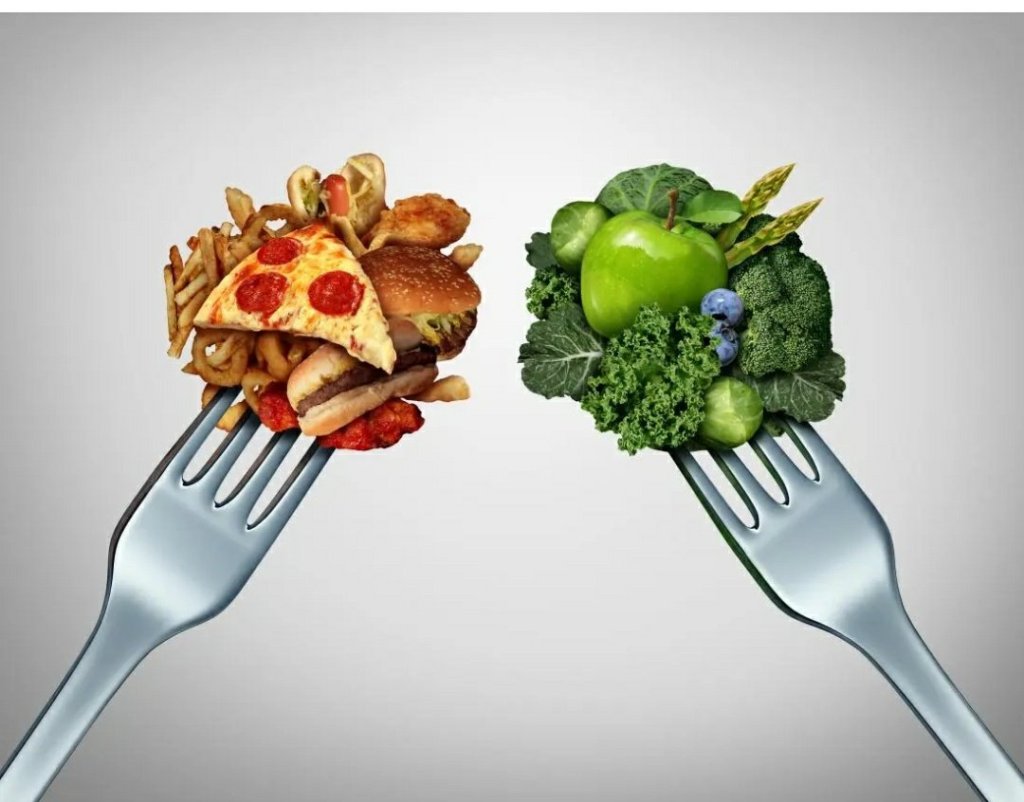
Planning Your Diet While you may be tempted to cut out entire food groups, you want to make sure your diet is still nutritious, varied, and balanced. In fact, if you’re eating fewer calories, the composition of each one will matter even more.
Wedding planning can be stressful enough without the mood swings and cravings that come from cutting carbs, or the fatigue from anemia and nutritional deficiencies. A balanced diet will provide you with the energy you need to stay focused and, most important of all, enjoy every moment of your day once it comes.
You can adjust the ratio of different food groups and macronutrients in your diet to promote safe weight loss without cutting them out entirely. Here are some guidelines to help get you started:
Reduce your intake of carbohydrates. People who eat a 2,000-calorie diet generally consume between 225 and 325 grams of carbohydrates, including complex carbs and simple carbs like sugar, each day. Try cutting back to around 50 to 150 grams of carbs per day while you work toward your goal. Increase your protein intake. Dietary recommendations for protein generally state the macronutrient should account for 10% and 35% of your daily calorie intake.3 If your protein intake is at the lower end, try ramping it up by adding some quality high-protein foods to your diet. Studies have found that people who consumed 25% to 30% of their calories from lean protein lost more body fat and increased the number of calories that their bodies burned at rest.5
Get enough fiber. The average recommended daily value for fiber is 25–28 grams per day for adult women and 31–34 grams for adult men.3 The benefits of fiber are well-known when it comes to preventing constipation, but dietary fiber is also important to the absorption of vitamins, minerals, and other nutrients.6 It also helps you feel more satisfied, curbing hunger, especially when you get fiber from food sources rather than supplements.7 Cut back on alcohol and caffeine. A single alcoholic drink can add 100 calories or more to your daily intake. If you want to imbibe, opt for a wine spritzer (75 calories and 0 grams carbs) or a flavored vodka with soda (96 calories and 0 grams carbs) over more sugary or carb-rich beverages. In addition, excess alcohol consumption can lead to dehydration.8 While black coffee is a diet staple and caffeine can provide energy, it’s also more likely to increase anxiety and the jitters. Eat healthy fats. While “low fat” and “no fat” are an established part of diet vocabulary, fats are an important part of a balanced diet. All fats are not created equal, however. Try switching out saturated and trans fats for healthier monounsaturated and polyunsaturated fats. Stay hydrated. Most people need to drink at least eight 8-ounce glasses of water each day, but that can vary based on your activity level and health conditions. Proper hydration promotes good digestion and glowing skin, but it’s especially important if you’re adding exercise to your routine.9 Eat smaller, more frequent meals. Try eating five or six smaller meals a day rather than three main meals. This helps stabilize your metabolism and can keep hunger and cravings at bay.10 If you get hungry between meals, keep healthy snacks on hand. Measure out the portions in advance. Don’t skip meals. If you skip breakfast or lunch, you’re much more likely to overdo it at dinner.11 If you can, plan meals ahead. Cook with ingredients that will help you feel satisfied and provide all the nutrition you need. Avoiding eating on the go. Sitting down at the table and eating your food on a plate with cutlery gives you a much more accurate sense of how much you’re eating compared to eating from a takeout container or fast food bag. Plan ahead. Weddings involve a lot of celebrations and many of them involve delicious food. To avoid overeating at a restaurant, check the menu online and figure out what you are going to eat before you arrive. You can also pick healthy venues for any pre-wedding event. Have treats. You don’t need to deprive yourself completely. Watching what you eat doesn’t mean you have to forgo taste-testing your wedding cake or sampling some chocolates for your guests. Plan ahead for scheduled treats and try not to feel guilty about the occasional unexpected delight. Do Quick Weight Loss Methods Actually Work? Adding Exercise Diet isn’t the only factor to consider when planning for weight loss. Exercise supports the process by ramping up your metabolism (the conversion of calories and oxygen into energy).12 You don’t have to spend hours at the gym or run a marathon, but thinking back to the weight-loss equation, the goal is to burn more calories than you eat.
Here are four tips to keep in mind when you’re planning a workout routine:
Start slowly. Increase the intensity of your workout week on week. Combine cardio exercises to increase metabolism with strength training to tone and build lean muscle. Commit to a schedule as you would any appointment. If you have never worked out before, start with 30 minutes of exercise three times a week. On your days off, try to fit in a 30-minute walk at moderate intensity (your breathing is heavier but you can still hold a conversation).
If you already exercise regularly, try switching to higher-intensity workouts (such as interval training, circuit training, or HIIT). These workouts stimulate weight loss and take less time than a regular workout. You may want to work with a personal trainer who can help you stay focused and motivated, but also provide guidance so you don’t get carried away.
As with diet, you don’t want to overexercise. Exercising too much won’t just exhaust you, but also significantly increases your risk of injury.
Ideally, find a workout routine that includes fun and challenging activities you can stick to. Regular physical activity will aid your weight loss goals but exercise can also help reduce anxiety and stimulate mood-boosting endorphins.13
7 Exercise Tips That Make Weight Loss Easier Managing Stress If you’re feeling overwhelmed, don’t forget that between working out and meal planning, there are other important forms of self-care that will help you survive wedding planning and reach your weight loss goal if you have one.
Get support: You don’t have to do it alone. Talk to a trusted friend or family member about your plans—you might even find that someone else in your wedding party has a similar goal and you can support each other. Get plenty of rest: Aim for seven to eight hours of sleep per night, including weekends. Take steps to improve your sleep hygiene if you don’t feel like you’re getting good rest. Manage your stress: Weddings are meant to be a time of joy. If you’re feeling more tension than you can handle, explore mind-body therapies such as yoga, meditation, tai chi, guided imagery, progressive muscle release, and deep breathing exercises.14 Frequently Asked Questions When Should I Start to Lose Weight for My Wedding? Since it is not recommended to lose more than 1–2 pounds per week, it will depend on how much weight you are hoping to lose before your wedding day. If 5 pounds is your goal, you could probably meet that goal in about a month through a healthy diet and consistent exercise.
Can I Lose Weight Two Months Before My Wedding? Two months prior to your wedding day is plenty of time to lose up to 10 pounds by following a healthy weight loss plan. If you are trying to lose more than that, you may need to give yourself additional time.
How Can I Lose Belly Fat for My Wedding? A combination of a healthy diet and regular exercise that includes cardio and strength training is a proven method to burn fat and build lean muscle. However, fat loss is almost always experienced all over the body and it is not possible to spot reduce belly fat.15
Do Most Brides Want to Lose Weight Before Their Wedding? Many brides-to-be feel pressure to lose weight before their big day so that they feel good about how they look in their dress and their wedding photos. But just because many people think they should lose weight for their wedding day doesn’t necessarily mean that you have to.
A Word From Verywell Every plan—whether for a wedding or weight loss—will have its challenges. To stay calm and focused, remember that losing weight is about more than fitting into a dress, suit, or tuxedo, or looking a certain way in photos. Think about it as a lifestyle change rather than a one-time goal.
Remember, every weight loss journey is different for everyone and you should try to avoid comparing yourself to others. The benefits of being at a healthy weight will help you endure the ups and downs of wedding planning, allow you to enjoy your special day, and will stay with you long after you say “I do.”
If you are considering losing some weight or have been told you would benefit from weight loss for medical reasons, then it might be helpful to understand the concept of calories in versus calories out. This equation can help you to understand the basic metabolic process of weight loss. But keep in mind that changing your weight it isn’t as easy as calories in vs. calories out as several other factors can play a role in the process.
Calories In vs. Calories Out The calorie in vs. calorie out equation is based on your food intake and your daily metabolic needs. The food you consume supplies calories. Those calories are used to support your daily metabolic needs, including the energy needed for basic physiological functions and for physical activity.
If you consume more food than you need (calories in), the excess calories could turn into extra weight. But if you burn more calories than you consume (calories out), you burn stored body fat for energy and you may lose weight.
Basal Metabolic Rate Everyone has a basal metabolic rate (BMR). Your BMR is the number of calories your body needs for basic, life-sustaining functions such as circulation, breathing, and nutrient processing. This number is determined using a calculation that takes certain factors into consideration including a person’s age, height, weight, and activity level. You can calculate your basal metabolic rate using a mathematical formula.
Physical Activity The number of calories you need to sustain your current body weight is equal to your BMR plus calories needed for your current level of physical activity (PA). Your physical activity includes any exercise that you participate in and all non-exercise physical activities (such as folding laundry, walking to your coworker’s cubicle, cooking, or mowing the lawn). The number of calories you burn through physical activity varies substantially from individual to individual.
Calorie Deficit While there are many factors that can influence weight loss, if you want to lose weight you can create a calorie deficit by either consuming fewer calories than your body needs, burning extra calories through physical activity, or some combination of the two. For example: if a person needed 2500 calories per day to maintain their body weight and they reduced their calorie intake by 500 calories per day, they would be expected to lose about one pound of body weight per week.
Think of food as fuel and your body as a car. Food is the energy our bodies need to move. Overeating is like over-fueling. Any excess fuel you don’t use turns into fat and weight gain begins.
Other Factors The calorie equation may seem simple, but evidence suggests that there are other mechanisms in play when considering the calories in vs. calories out approach to weight loss. According to researchers, there are certain factors that complicate the process.1
For example, the researchers note that hunger hormones increase during and after the weight loss process. In addition, as you lose weight, your BMR decreases. So unless you increase your daily PA, you’ll need to re-evaluate the calories in/calories out equation regularly to make sure you are consuming the right number. And lastly, counting calories can be tedious and inexact.
In short, researchers suggest that even though counting calories and adhering to a calorie deficit may be effective (especially in the short term), certain mechanisms can reduce your metabolic rate and increase your calorie intake, which might cause you to regain any lost weight. There may be other strategies, such as focusing on macronutrient intake, that are more effective for some people.2
The key, say some scientists, is personalization. That is, finding a strategy that works for you.2 One way to fine-tune the best program for you, is to work with a registered dietitian.
Where to Get Weight Loss Help If You’re Overweight 5 Ways to Cut Calories Reducing your calorie intake is one way to lose weight. It’s best to consult with your healthcare professional before you decide to cut calories to make sure it is healthy and safe for you. Then, calories in vs. calories out may work for you if you know how many calories you need to lose weight and you are interested in finding ways to reduce your calorie intake. In addition, lifestyle changes, such as mindful eating, exercise, and other behavioral practices will help to facilitate weight loss and reduce the risk of weight regain.
People who are most successful are able to maintain the pleasure of eating without feeling deprived. If you start with small adjustments to your meals and your daily activity level, you are likely to feel motivated. Drastic changes can often be unsustainable. Here are a few steps you can take to create a calorie deficit.
Increase Daily Steps Walk more each day. You don’t even have to work out to increase your step count. Just make small adjustments to your routine. For example, park further away from your office or workspace so you have to add extra steps to get to the front door. Take the stairs instead of the elevator to your apartment. Take the dog for a walk after dinner. Research shows that walking 30 minutes per day on most days of the week can help to boost your health in numerous ways during weight loss.3
Reduce Portion Sizes To reduce your portions, considering serving yourself one less scoop of food or a slightly smaller portion than what you are used to. To fill the void, add some non-starchy vegetables for more volume and fiber and fewer calories. Or use a smaller plate. Using a smaller plate will reduce the serving of food, but you’ll still feel like you are eating a healthy serving because your plate will be full.
It may also be helpful to familiarize yourself with what a serving size is. For example, a serving of starch is about the size of your fist. A serving of protein is about the size of the palm of your hand. Lastly, simply by slowing down your eating, you may be able to naturally start reducing portion sizes as you will feel fuller and more satisfied sooner.
Helpful Portion Size Guide for Weight Loss Swap High-Calorie Drinks Many of us consume sugar-sweetened beverages each day. In fact, data collected by the Centers for Disease Control indicates that over 50% of Americans consume at least one sugary beverage each day (although exact numbers vary by geographical area). Consumption of sugary drinks is linked to less healthy behaviors and may contribute substantial calories to your daily total.4 If you can drink water instead, you can cut 100 or calories or more from your daily intake.
Skip Condiments and Sauces You can reduce the calories in your sandwich at lunchtime by avoiding mayonnaise or other high-fat spreads. And if you can avoid creamy sauces on your pasta or chicken dishes you’ll cut fat and calories even more.
Start an Easy Exercise Program If you want to burn more calories, you don’t necessarily have to go to the gym every day or work out to the point of exhaustion. Instead, start an easy exercise program at home and commit to a 20-minute session in the comfort of your living room. A small amount of exercise can make a big difference in the way your body looks and feels. Physical activity also gives you a mental boost by improving your mood. In the end, consistency matters most.
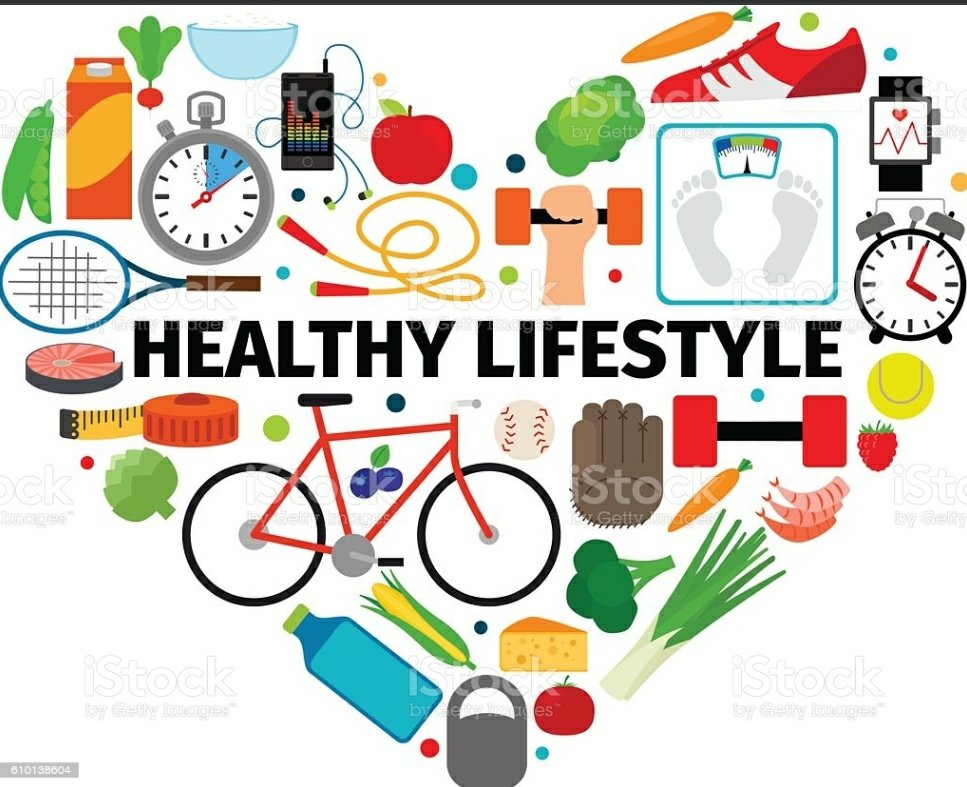
The phrase ‘healthy lifestyle’ is an abbreviated definition of what it looks like to live a vibrant, active life with a healthy body and healthy mind. Creating a healthy lifestyle doesn’t have to mean drastic changes. Making gradual small changes to your daily routine can have a big impact.
What Is a Healthy Lifestyle?
You know the obvious behaviors that describe someone who is healthy and takes care of themselves. A healthy person doesn’t smoke, tries to maintain a healthy weight, eats healthy foods with plenty of fruits, vegetables and fiber and, of course, exercises on a regular basis.
Then there are other elements to add to the list. A healthy person also knows how to manage stress, gets good quality sleep each night, doesn’t drink too much, doesn’t sit too much—basically, does everything in moderation all the time. When you look at everything that could possibly go into a healthy lifestyle, you can see just how hard all of those things are in our current world.
The good news is, you don’t have to change everything at the same time. In fact, the trick to healthy living is making small changes—taking more steps each day,1 adding fruit to your cereal, having an extra glass of water, or saying no to that second helping of buttery mashed potatoes. One thing you can do right now to make your lifestyle healthier is to move more.
Benefits of Physical Activity
You know you need to exercise, but there are many excuses not to do it. You’re too busy, don’t know where to start, you’re not motivated or you’re afraid you’ll injure yourself. Maybe you think exercise has to be really hard or it isn’t good enough.
Whatever definition you have about what exercise is or isn’t, the bottom line is that exercise is movement. Whether it’s walking around the block or running a marathon, that movement is exercise and every time you move more than you normally do, it counts.
Healthy Weight Loss or Maintenance
Even if you opt for small changes, the benefits are still pretty amazing. For example, increasing your activity level can help you to reach and maintain a healthy weight. If you are currently overweight, small steps toward that goal can have an impact.
Australian researchers say a treatment found in the venom of one of the world’s deadliest spiders could save the lives of heart attack victims.
A team from the University of Queensland studied the poison from the Fraser Island funnel-web spider in eastern Australia. They say the venom contains what could be a life-saving molecule, or peptide.
The peptide could block so-called death signals sent to cells after a heart attack, when blood flow to the heart is reduced. A reduction in blood flow cuts off oxygen to the heart muscles. This results in a message being sent in the body for heart cells to die.
Scientists have not been able to develop a drug that stops this death signal, even after many years of study. Australian experts have said that is one of the reasons heart disease continues to be the leading cause of death around the world. The World Health Organization estimates that 17.9 million people die each year from diseases of the heart.
Doctor Sarah Scheuer is a researcher at the Victor Chang Cardiac Research Institute. She helped lead a study on the spider venom that was recently published in the journal Circulation.
“We are using this special little peptide from a small portion of the funnel web spider venom,” she said. “What we found is this peptide is able to help protect the heart where there is a lack of blood supply or blood flow.”
She added that the discovery could also help heart transplant patients.
Australian researchers believe the molecule from the spider venom blocks the heart’s ability to sense acid after a heart attack. That interferes with the death message.
The scientists hope the treatment can be used by emergency workers in the future.
The discovery builds on earlier work that found that a small protein in the venom of the Fraser Island funnel-web spider greatly improved patients’ recovery from a stroke.
The protein has been tested in human heart cells. The Australian team aims to start research studies in people for both stroke and heart disease within two to three years.








 New media